About
GIOMALI WINERY
Farm 208, Ganzvlei
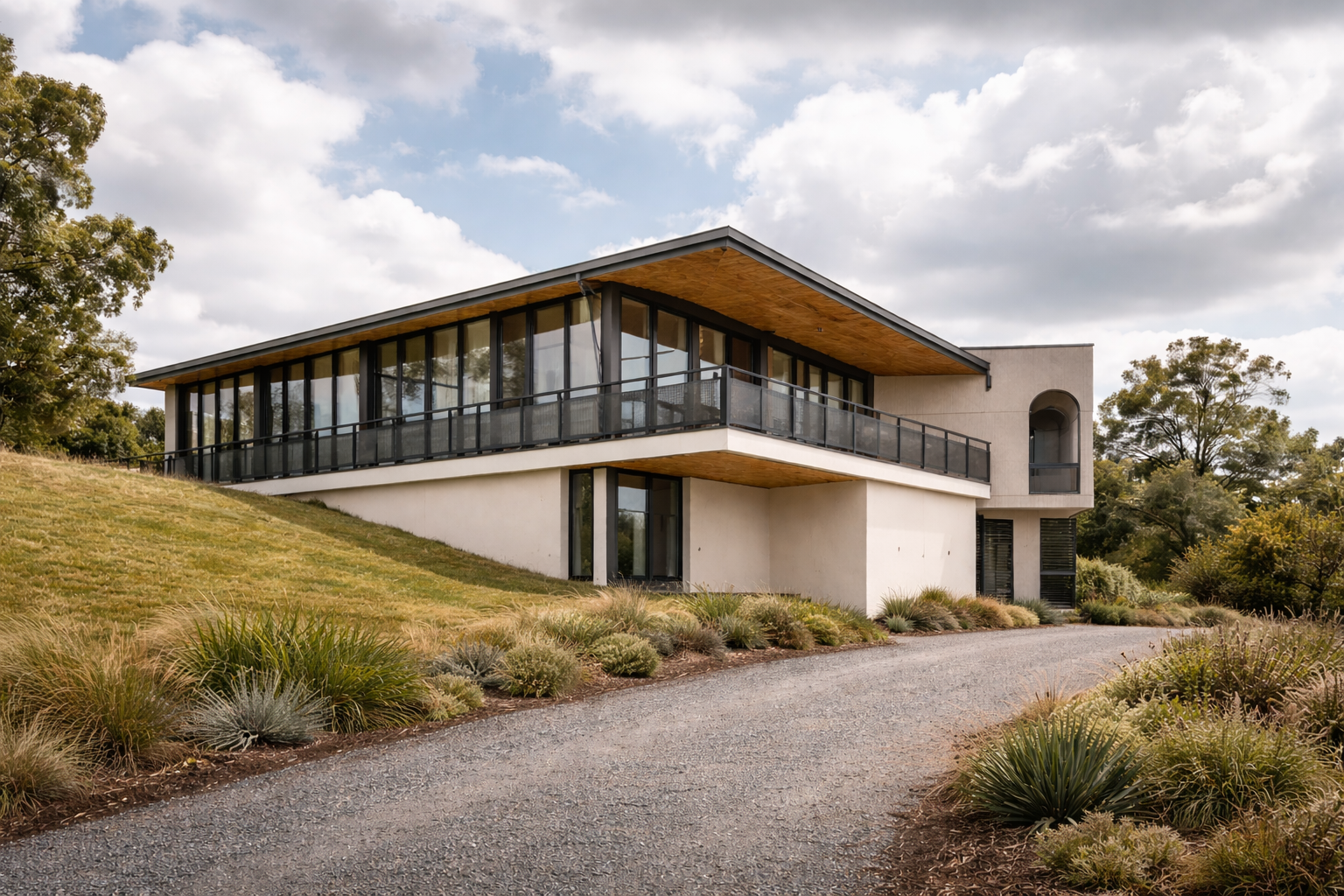
Set within the productive landscape of an established grape farm in Ganzvlei, the development of a winery emerged as a natural evolution for the client—an opportunity to bring the full cycle of wine production onto the estate rather than relying on external facilities. The site itself offers a remarkable setting, with a primary south-eastern outlook across a layered panorama of landscape, lake, and distant sea, while a secondary north-western orientation opens toward the surrounding vineyards.
These conditions informed an architectural approach that closely intertwines the process of winemaking with the experience of the final product. The building is conceived as a sequence of spatial moments that reveal aspects of production while guiding visitors toward the tasting environment. From the moment of arrival, the presence of the fermentation cellar becomes perceptible—whether consciously recognised or simply sensed—establishing an immediate connection between the unseen processes of transformation and the wine ultimately enjoyed in the tasting space.
In this way, the architecture invites visitors to participate in the narrative of the estate: a gradual unfolding from cultivation to craft, culminating in a shared moment of celebration. This guiding idea was first explored in the early first-floor concept sketch illustrated below.
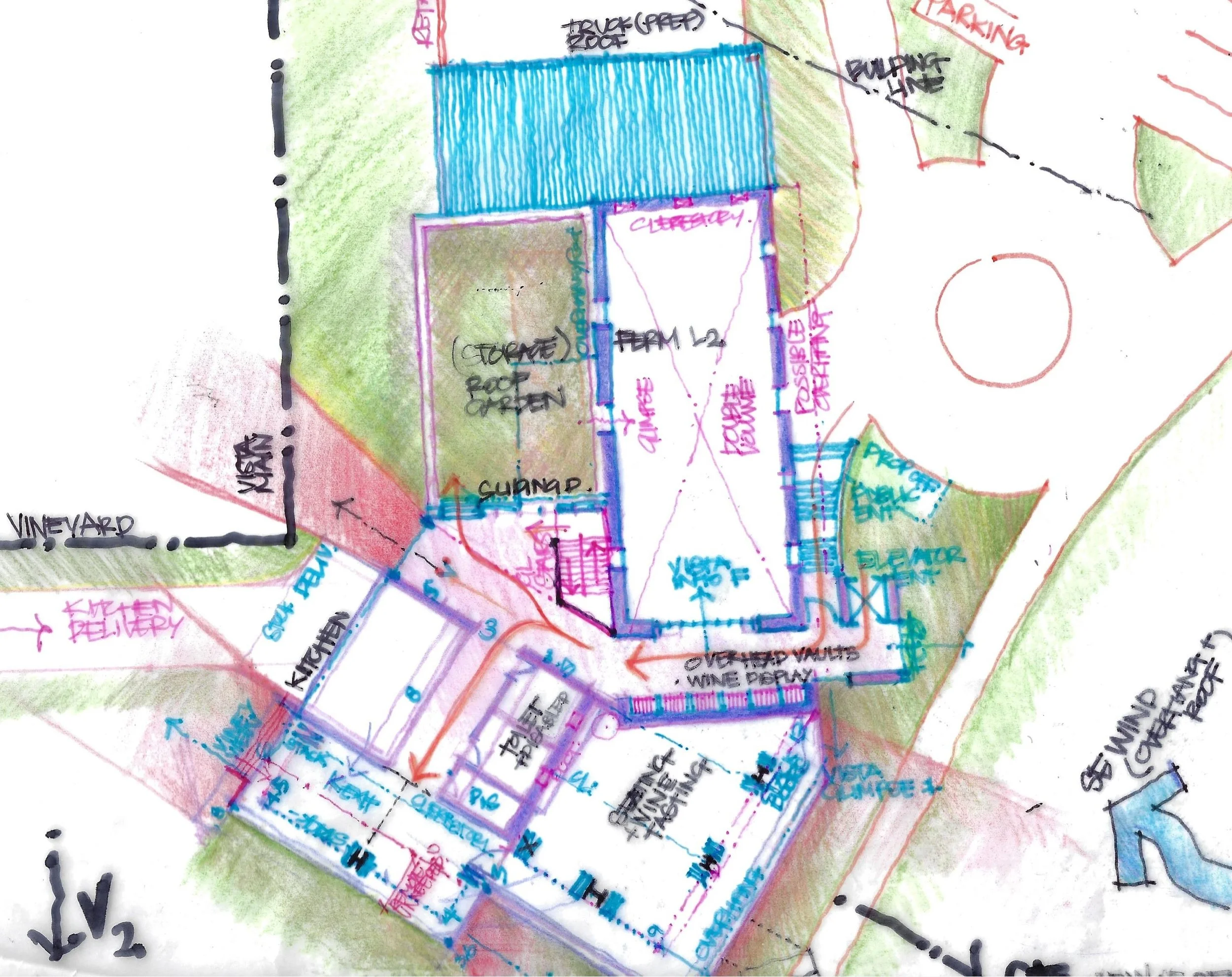
A central request from the client was the ability to walk directly from the vineyard into the wine tasting space—an idea that became a defining move in the project’s development. The architecture responds by aligning the act of tasting with its origins: visitors step from the vineyard, sample the wine it produces, and look outward across the same landscape toward the distant sea. In this way, the experience binds sight, place, and flavour into a single sensory moment.
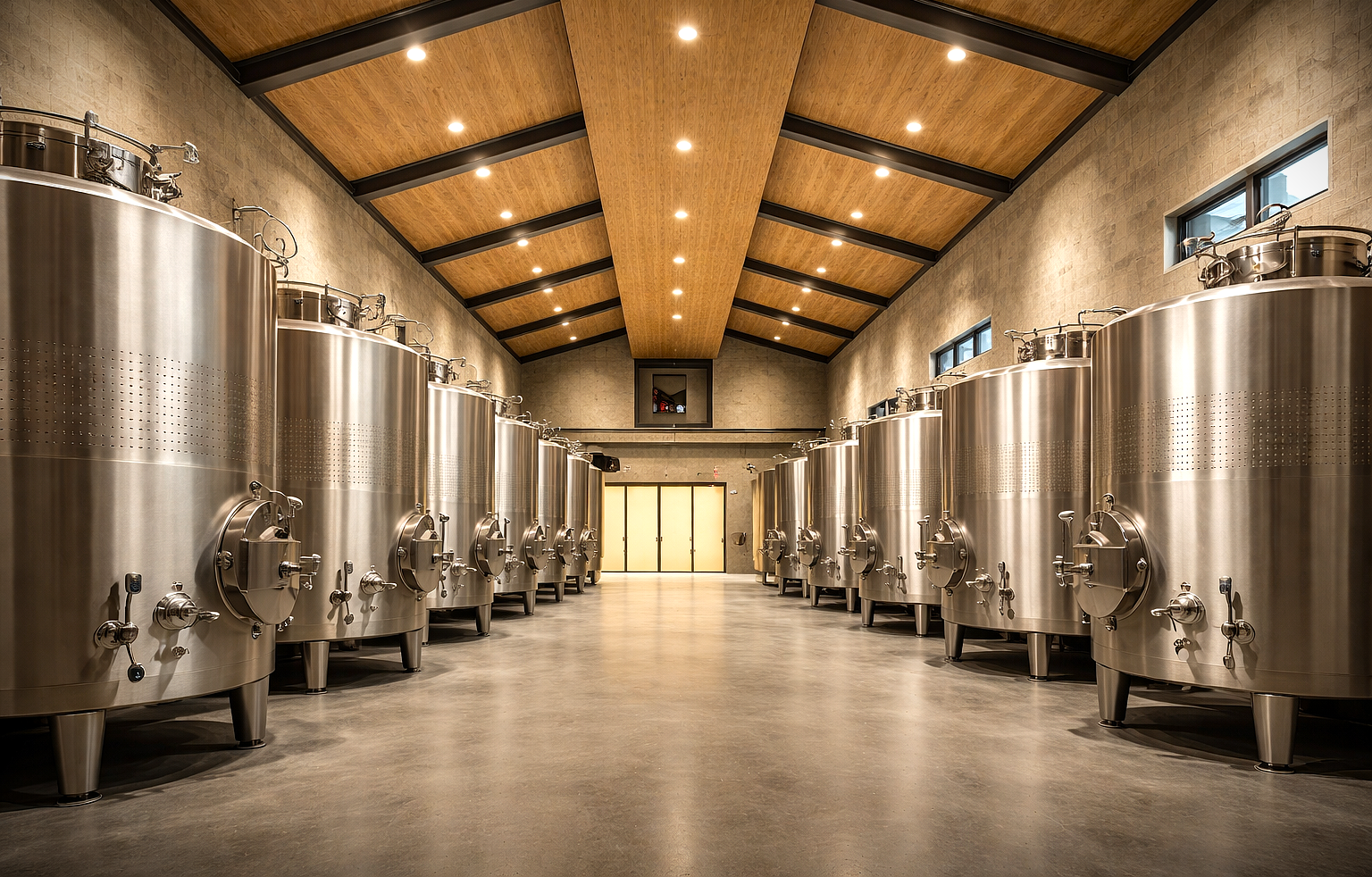
The building works with the natural contours of the site, pivoting to orient its public spaces toward both the vineyard and the coastal horizon. Beneath these outward-facing areas, the production programmes are embedded into the ground, taking advantage of the earth’s natural cooling properties. Preparation, fermentation, aging, and storage are therefore housed below grade, where stable temperatures support the technical demands of winemaking.
This approach creates a clear architectural dialogue: spaces above ground celebrate view, arrival, and tasting, while the quieter, subterranean levels accommodate the measured processes that give rise to the wine itself.
Project:
Giomali Winery in Portion 49 of Ganzvlei No.208
Client:
Fabio Pesto Trust
Area:
—m²
Completed:
In Process
Collaborators:
Manuel Camurali & Waste Management (Gareth McConkey)